All animations · In the chapter · Open full MP4
Animation 4
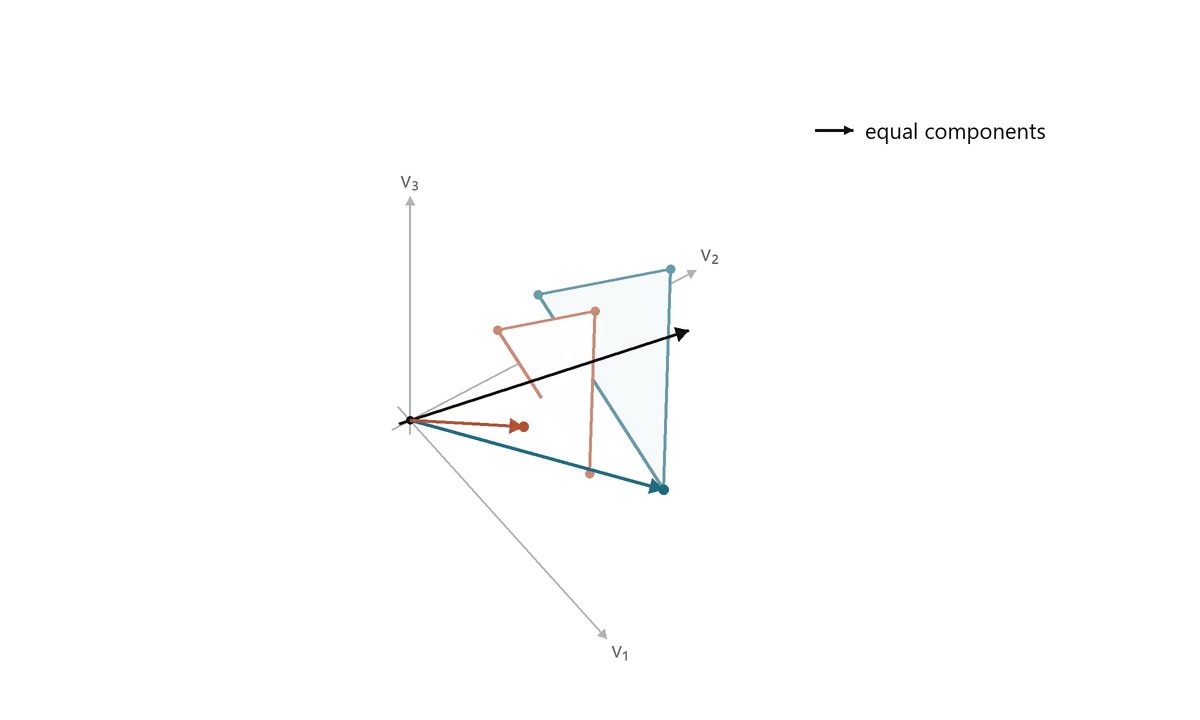
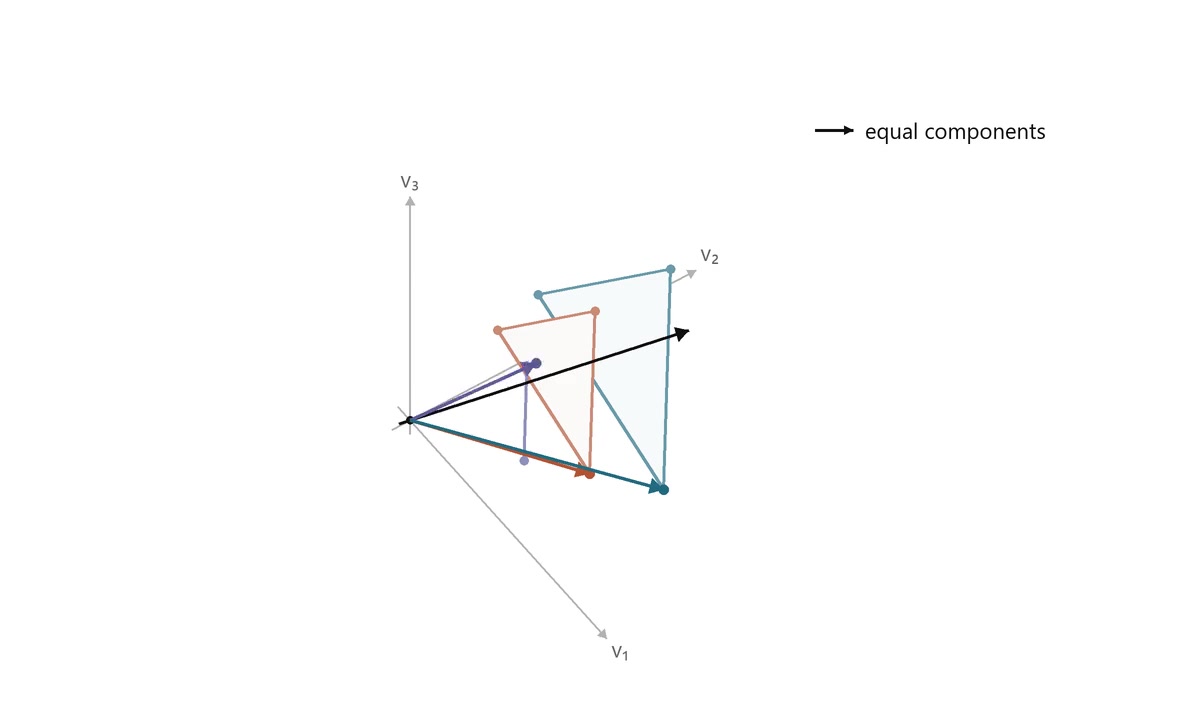
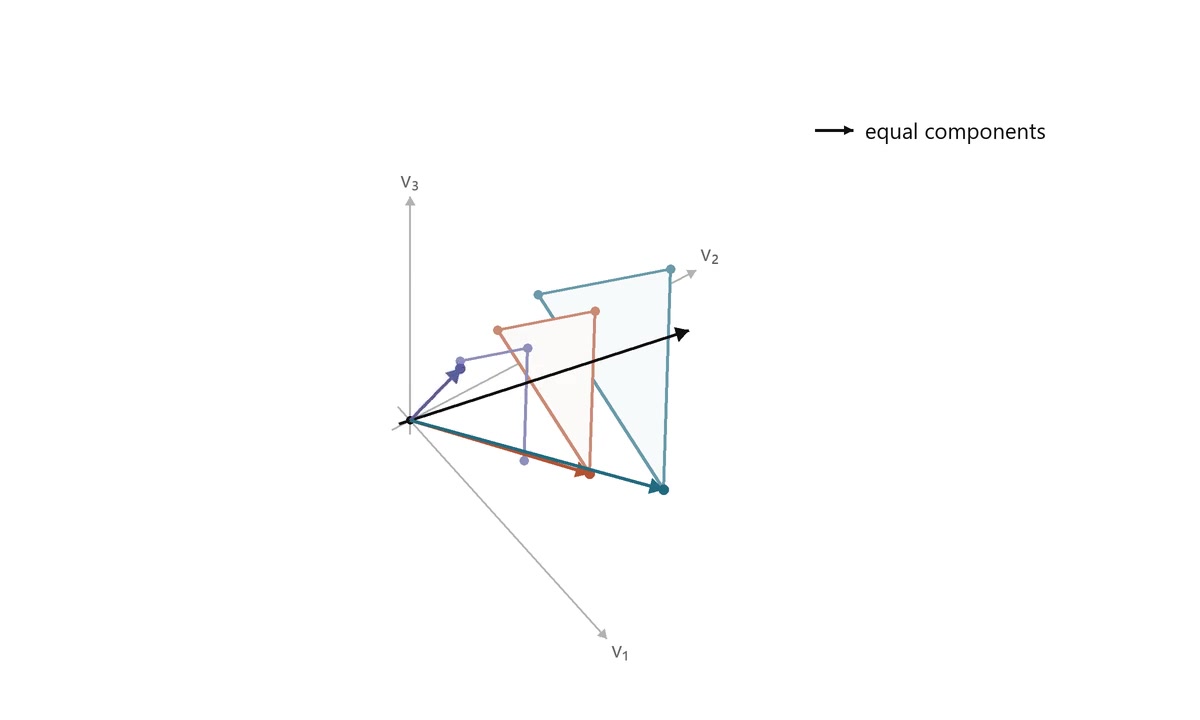
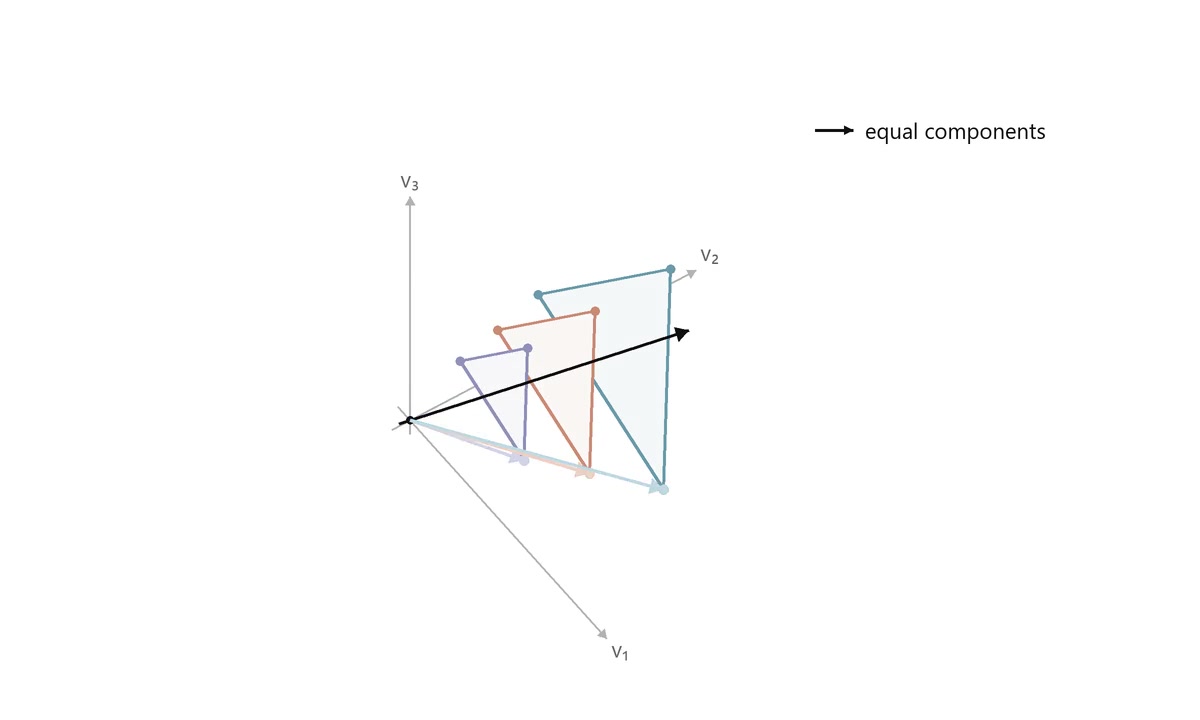
Reducing 3-dimensional representation to 2-dimensional
symmetry-d3-irrep-collapse.mp4
These are sparse samples decoded from the current MP4, not newly rendered illustrations. They can support checks of the sampled states and labels, but cannot establish continuous motion, timing, transitions, or the absence of problems between samples. Use the full MP4 when judging those properties.
1200 × 720 · 24 fps · 23.75 s · 570 frames · 12 samples
MP4 SHA-256 74829beaa2e554b3dc0a76253f7eaec8b5360cfbb3efab93945ef587ba80fb77
Frame manifest · Context markdown · Download complete review packet
Chapter context
Section: Representations. Excerpts are verbatim; line numbers refer to the included chapter markdown.
Caption
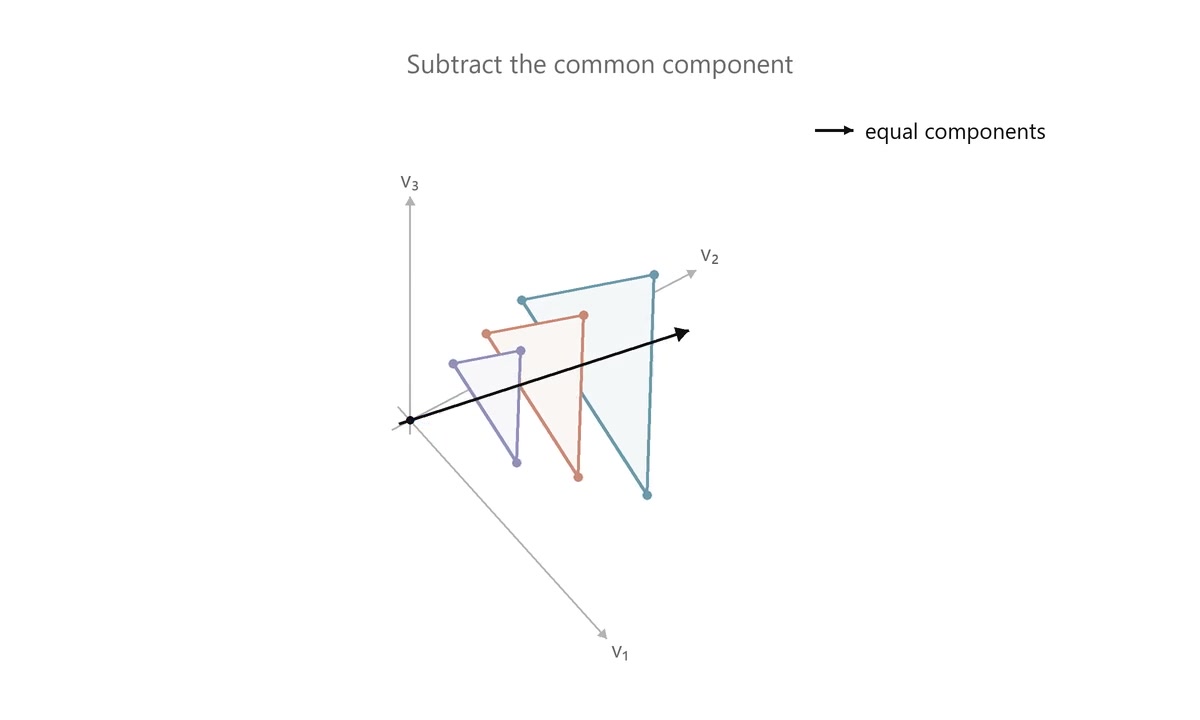
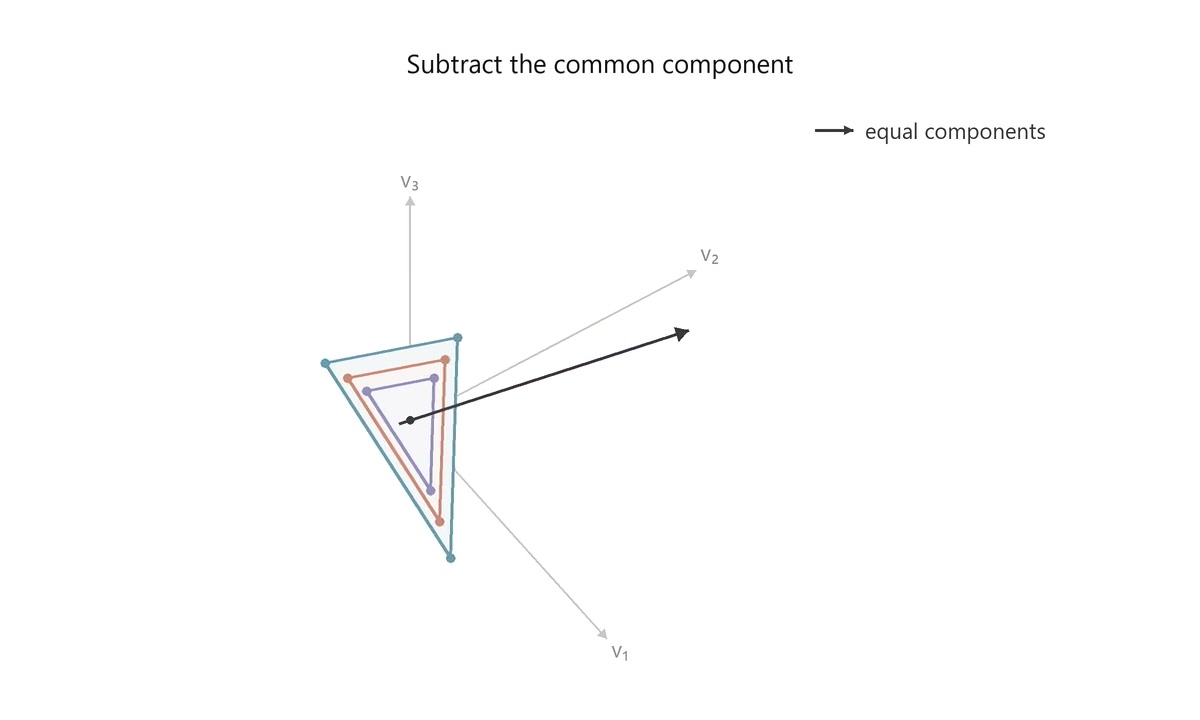
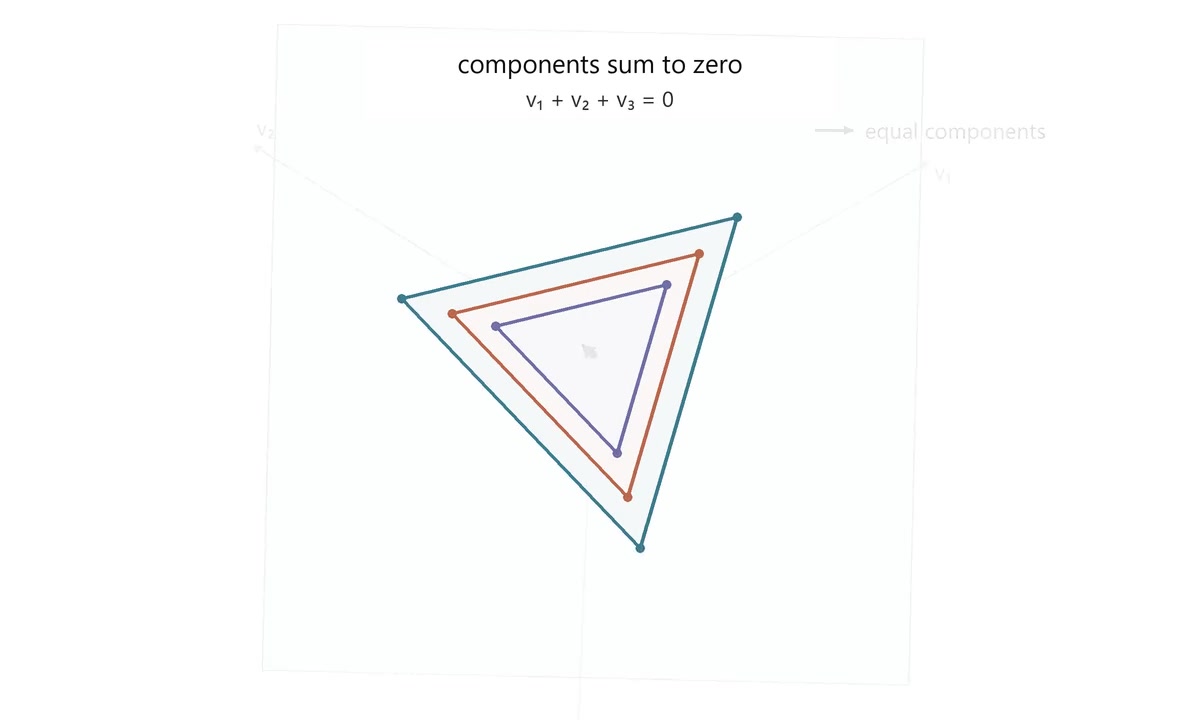
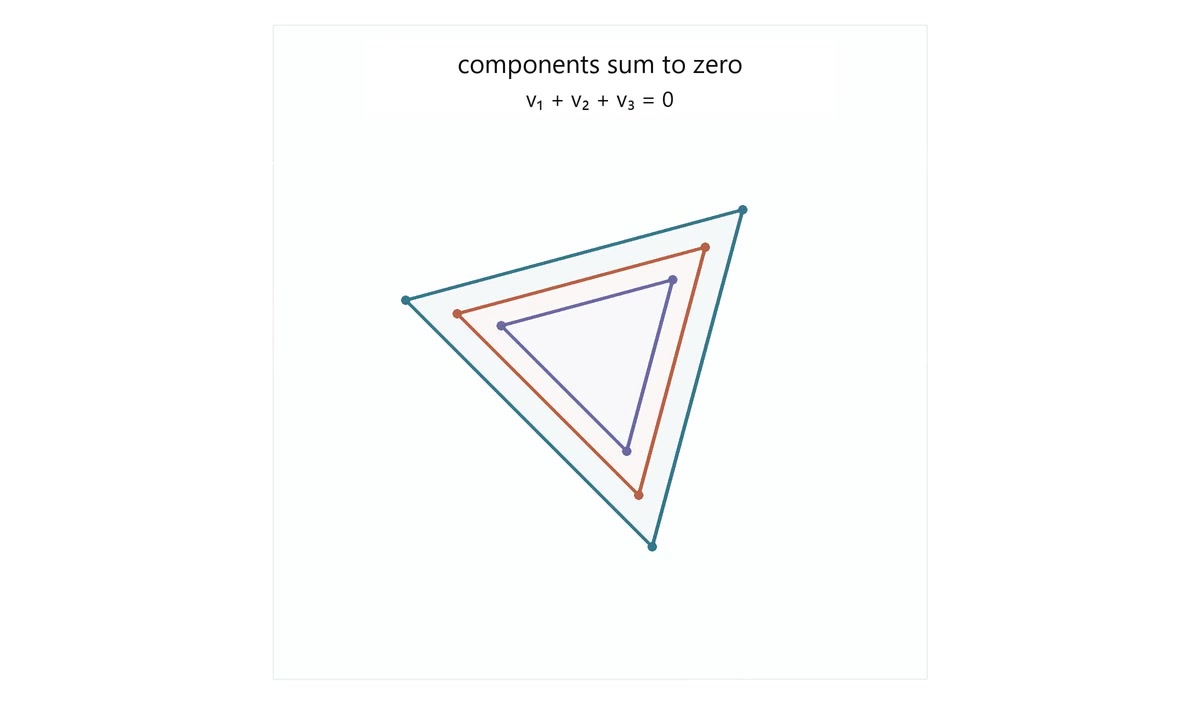
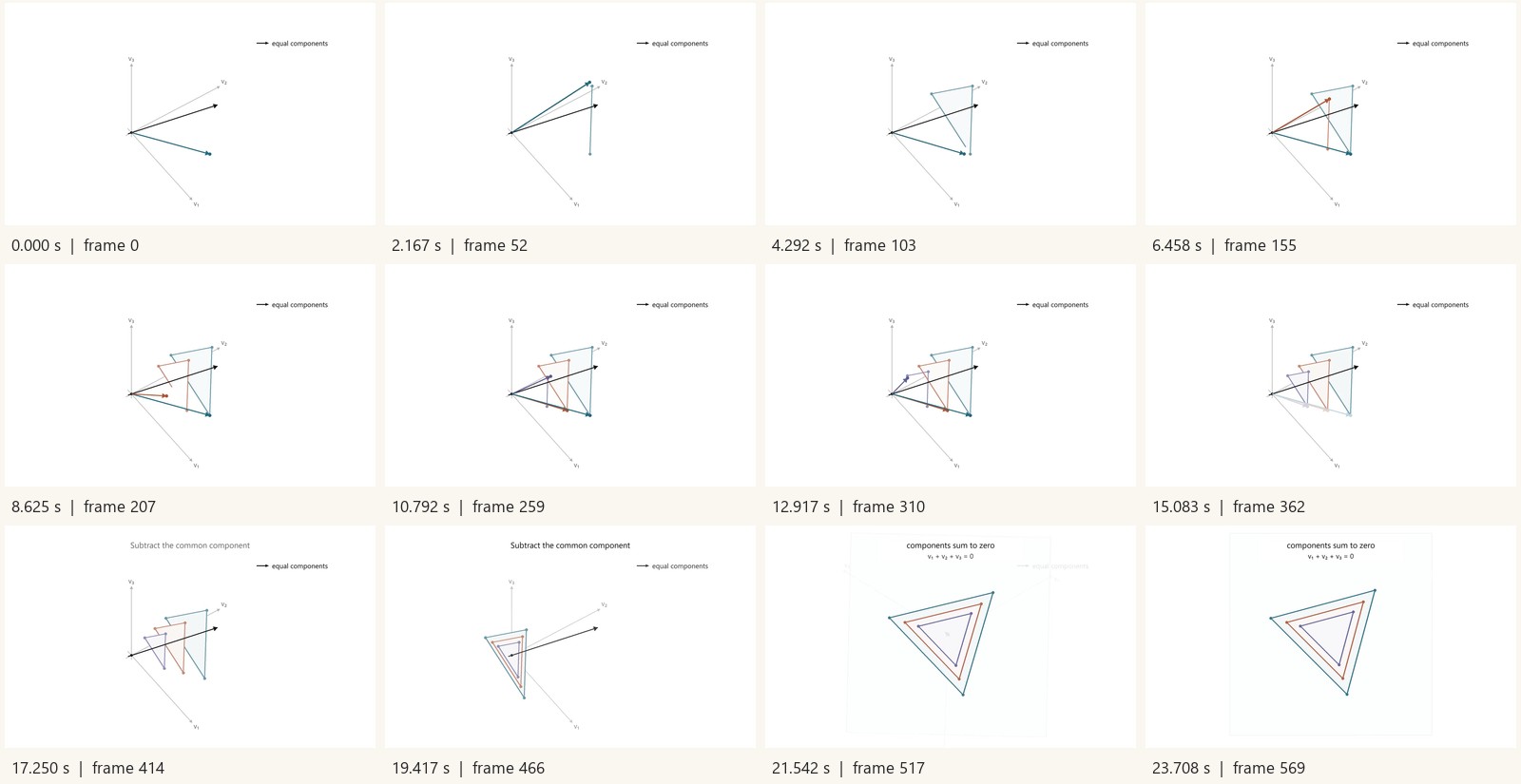
Reducing 3-dimensional representation to 2-dimensional
Image description
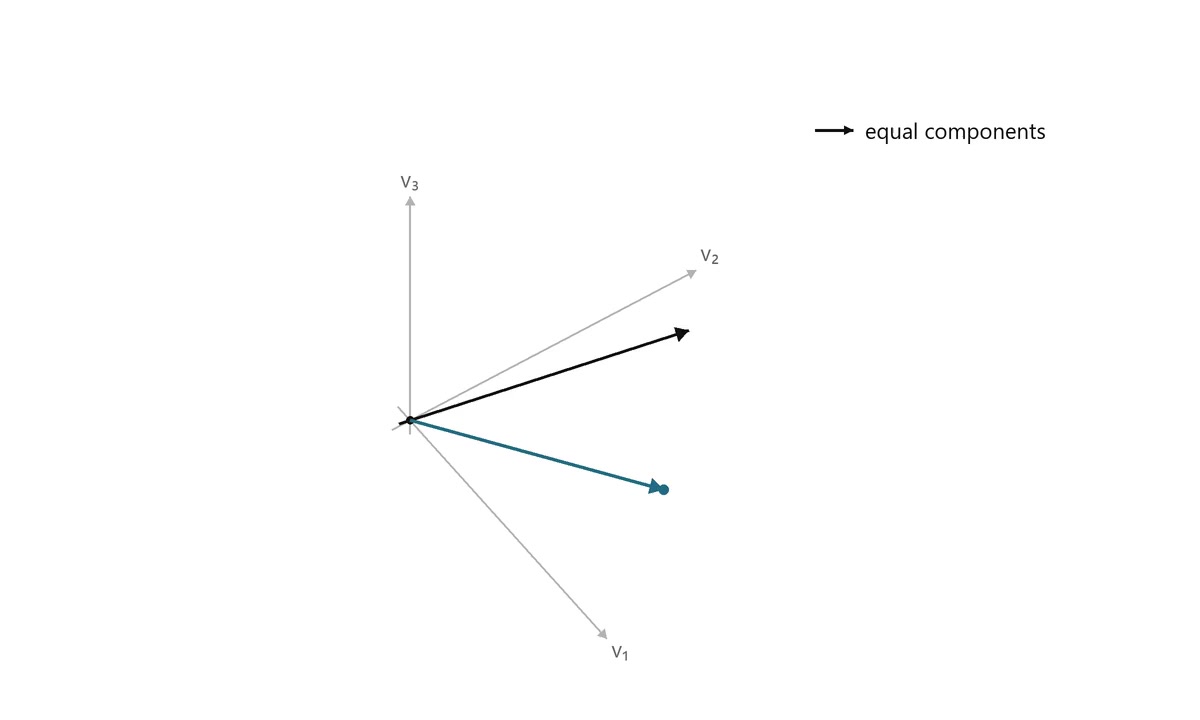
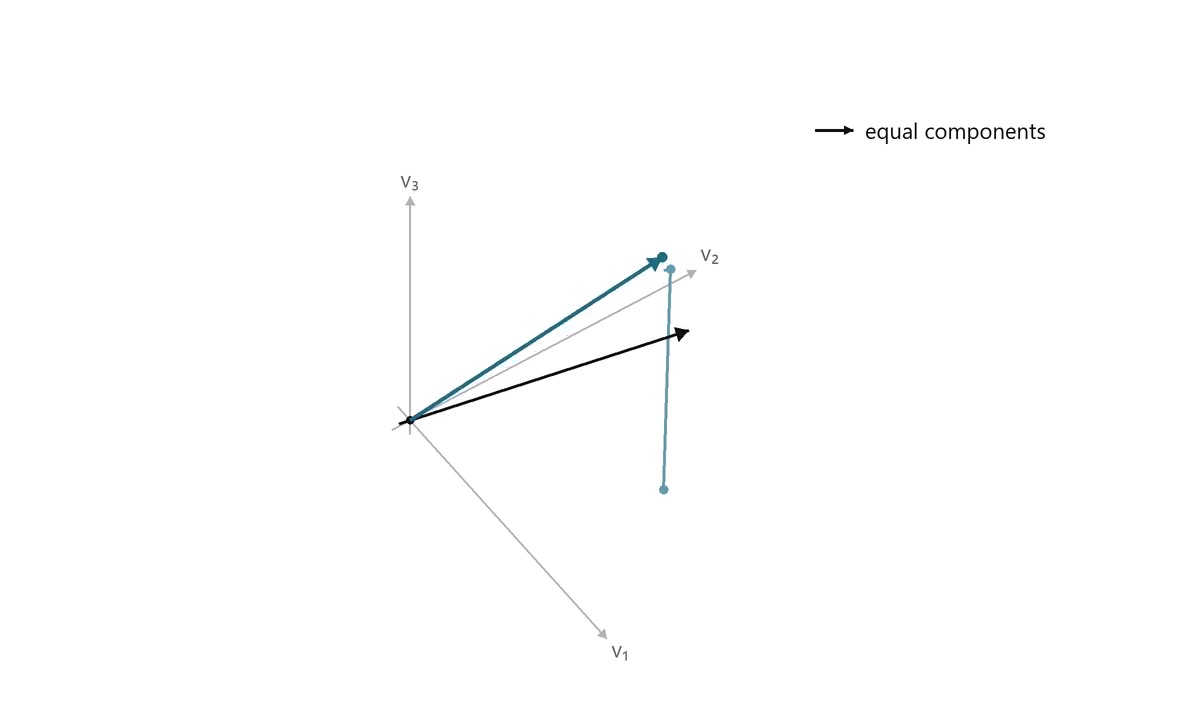
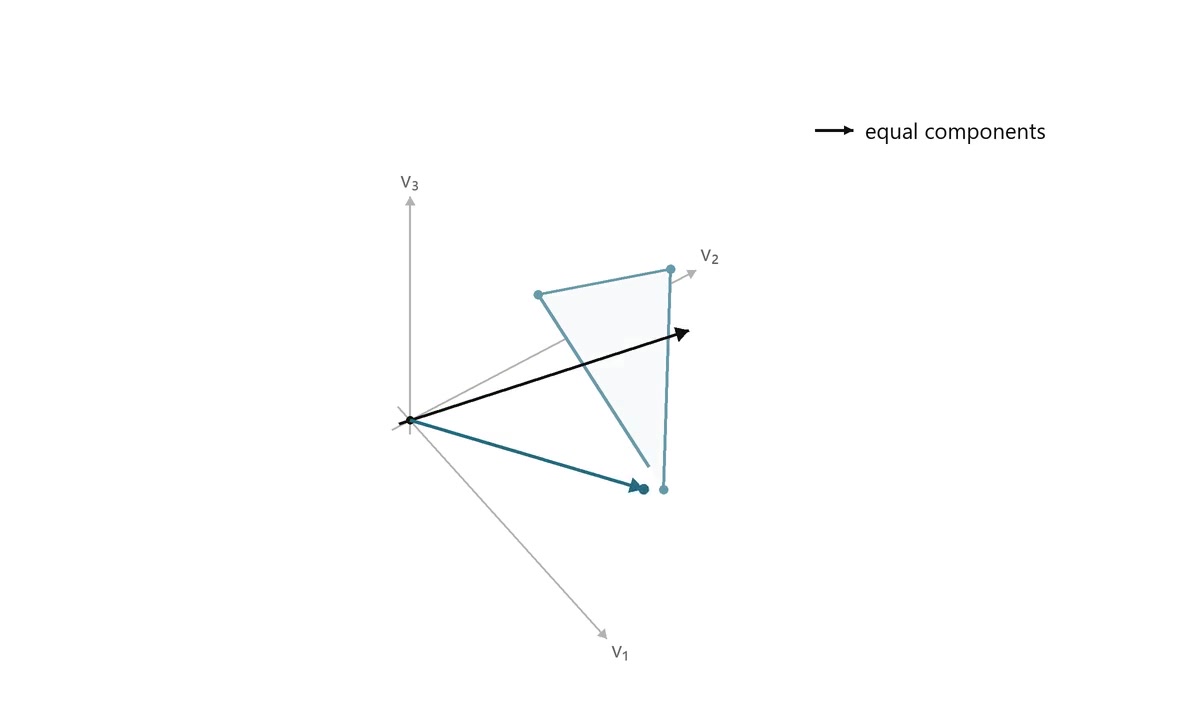
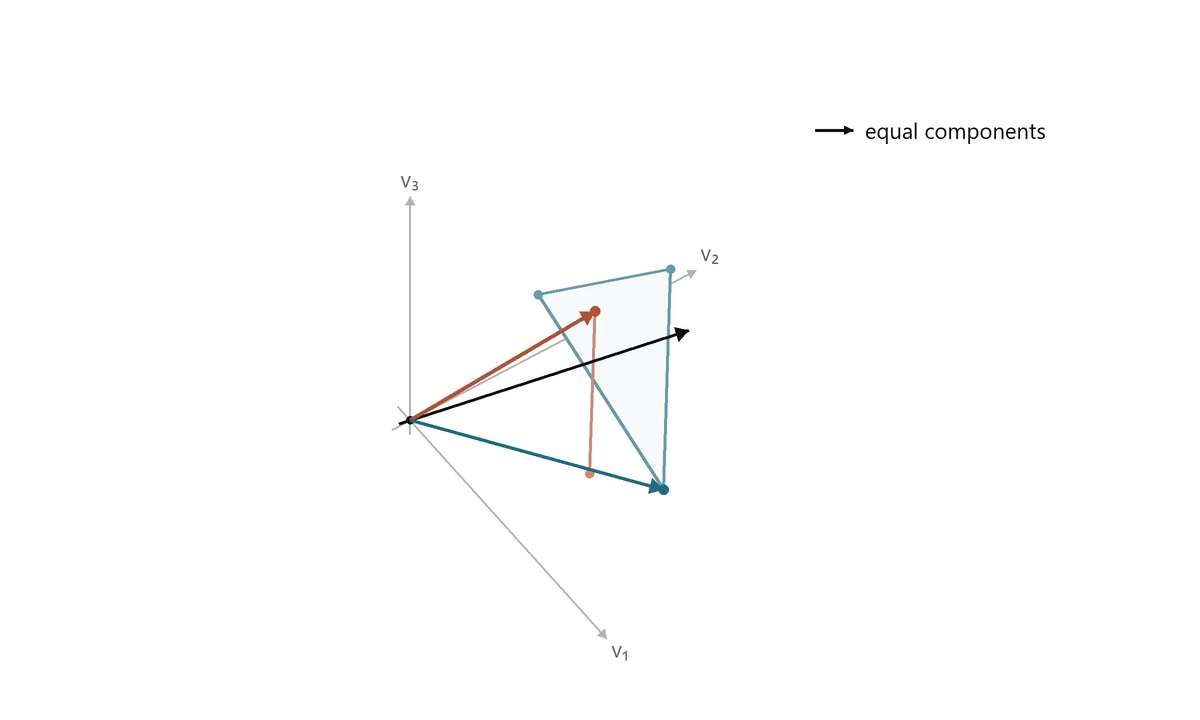
Subtracting the common component leaves the D3 representation in the zero-sum plane
Before the animation
Chapter lines 132–138
Chapter lines 140–140
The common part lies on the rotation axis and is unchanged by every permutation. The zero-sum part lies in a plane through the origin. Although written with three components, it needs only two independent numbers, since the third must make their sum zero.
After the animation
Chapter lines 148–148
We also notice that vectors that lie on the axis of rotation itself are left unchanged by the transformation. A way to think of this is to allow the triangle's vertices to store some information, like a number or any numerical quantity. If the value they store is the same for all vertices, the symmetry actions have no effect, whereas if they are different, the actions permute those values in a way that can be represented in a 2-dimensional vector space. The 3-dimensional representation space we began with is thus decomposable into 2 subspaces, one 1-dimensional, the other 2-dimensional. These cannot be decomposed further. That is, there is no lower-dimensional space such that an allowable transformation of any state remains in that space. The 1-dimensional and 2-dimensional representations are called irreducible representations or irreps for short. This is admittedly heavy math. Why do we bother? In the story we have to tell of quantum physics, where constituents of matter must abide the dynamical symmetry of nature, each constituent, each type of particle such as electron or photon, corresponds to an irreducible representation of nature's symmetry. A particular state of the particle is encoded in an element in the corresponding irrep.
Generation source
Run the main script without arguments. It uses symmetry_d3_rendering for shared geometry, transformations, and drawing, then encodes its frames with FFmpeg. The imported module is a code dependency, not an input movie.
Mapping evidence and limits
The generator explicitly writes symmetry-d3-irrep-collapse.mp4; constants specify 1200 x 720 at 24 fps. No matching validation JSON is present. Attribution is by source/output name and pipeline, not a recorded movie hash.
Source SHA-256 values identify the exact downloadable bytes in this packet. The source mapping and recorded checks explain the likely generation pipeline; they do not prove that these exact source bytes produced the movie. A GitHub link pinned to a commit is provided only when the delivered source bytes exactly match that path at the build's Git HEAD.
- scripts/generate_symmetry_d3_irrep_collapse_animation.py · GitHub at 974f9de35254
SHA-256 b2b485ff2947a4c36a48e61f74e22e1ecc8c28c9b1f669360b86cdaeaa99c1c1 - scripts/symmetry_d3_rendering.py · GitHub at 974f9de35254
SHA-256 4be9f7169cfe3654b9a1457de70a65e29dd20cc4863c7445a5ca6155f4453d6c
Decoded contact sheet
Extraction method: Twelve evenly spaced decoded frame indices, including first and last. Native-resolution JPEGs from the encoded MP4; timestamps read from FFmpeg showinfo. No source rerendering. Frame indices are zero-based. Sparse samples do not establish continuous motion or capture every transition.. Frame indices are zero-based.
Full-size sampled frames