All animations · In the chapter · Open full MP4
Animation 17
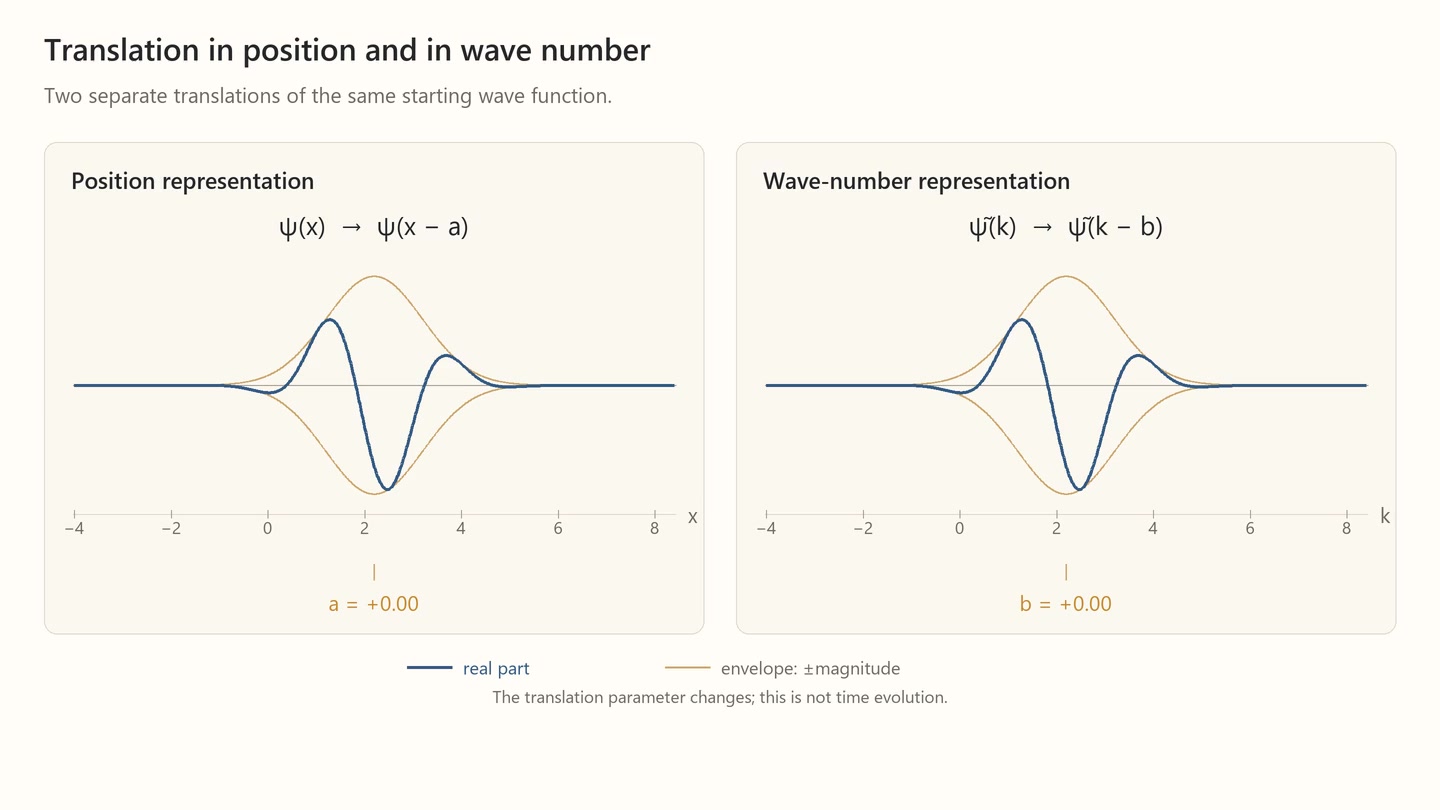
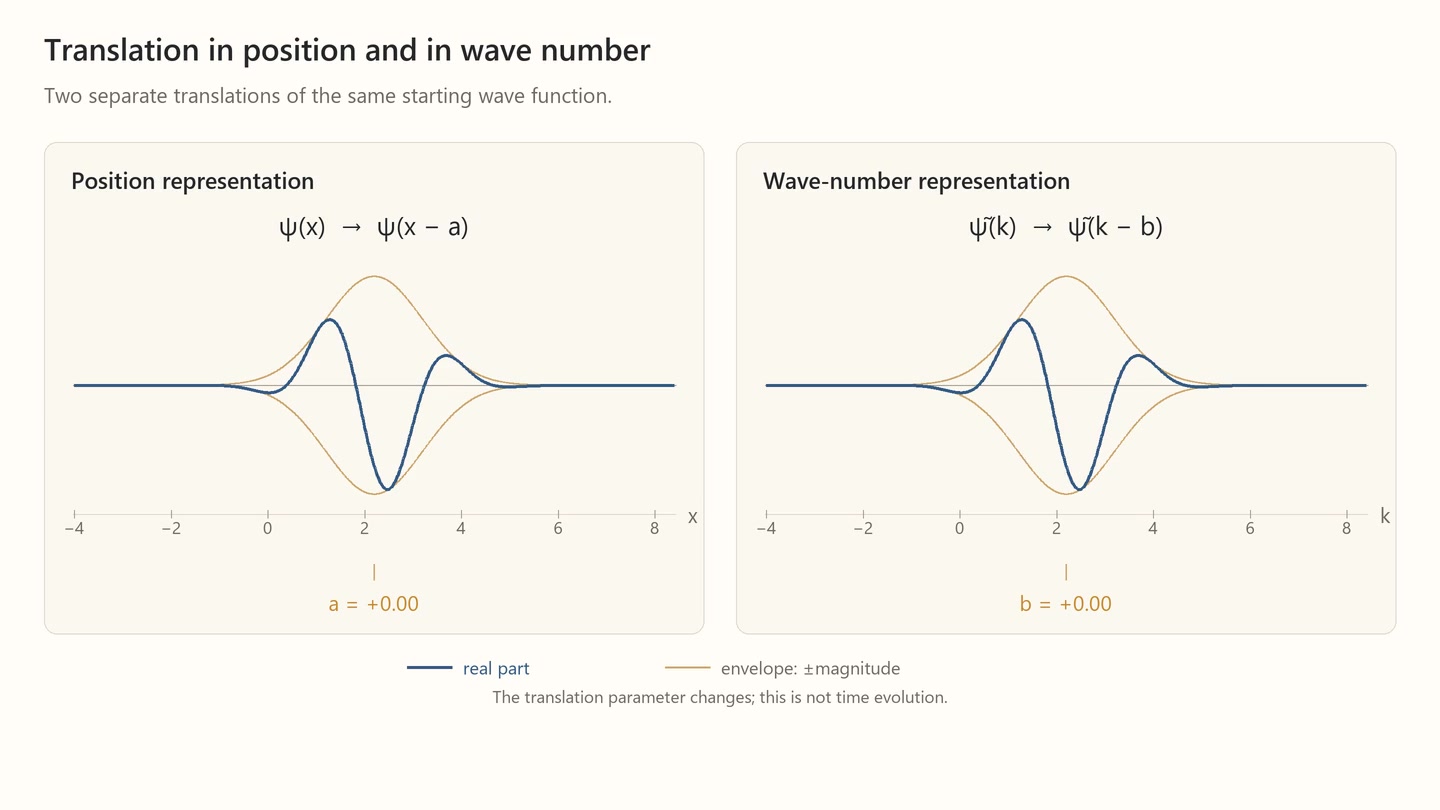
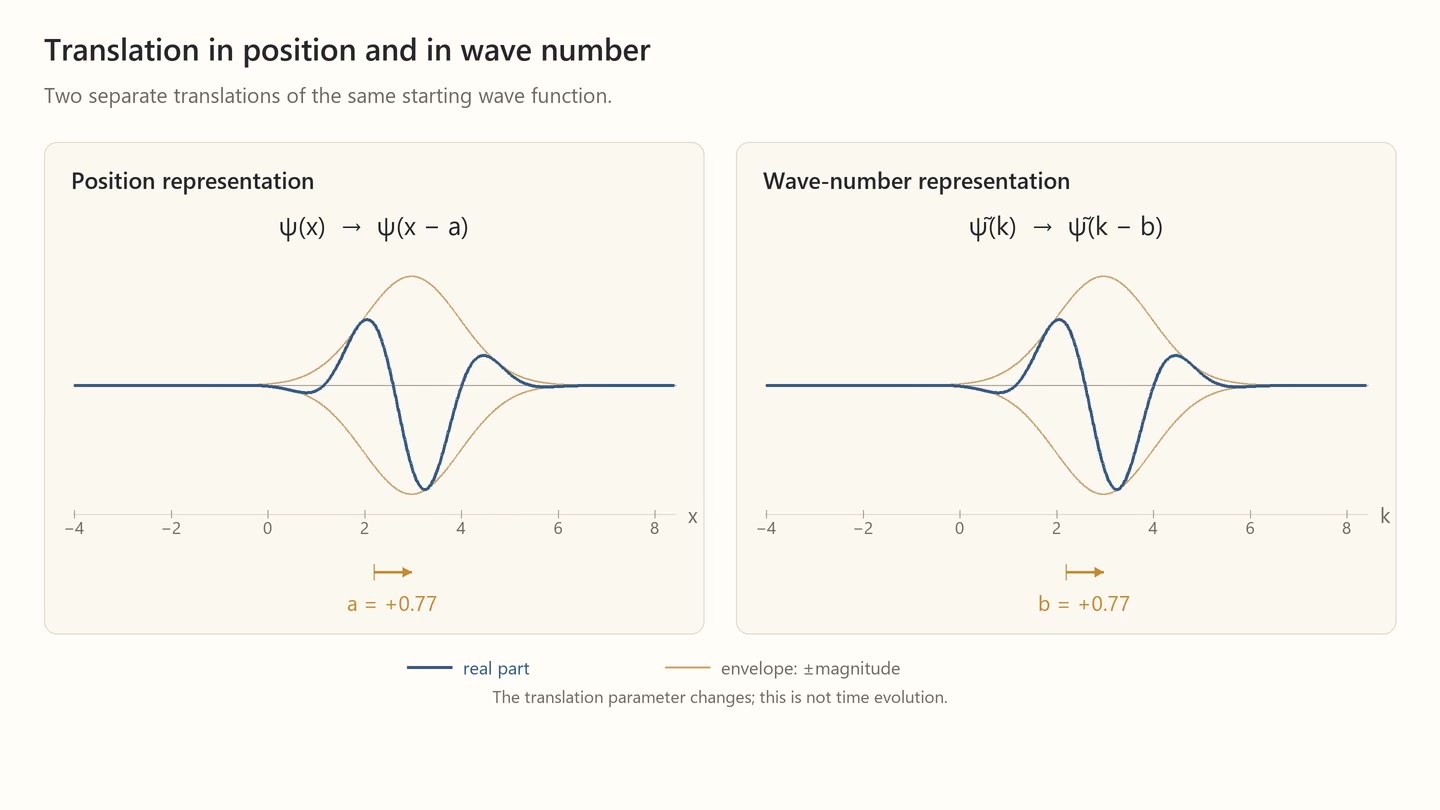
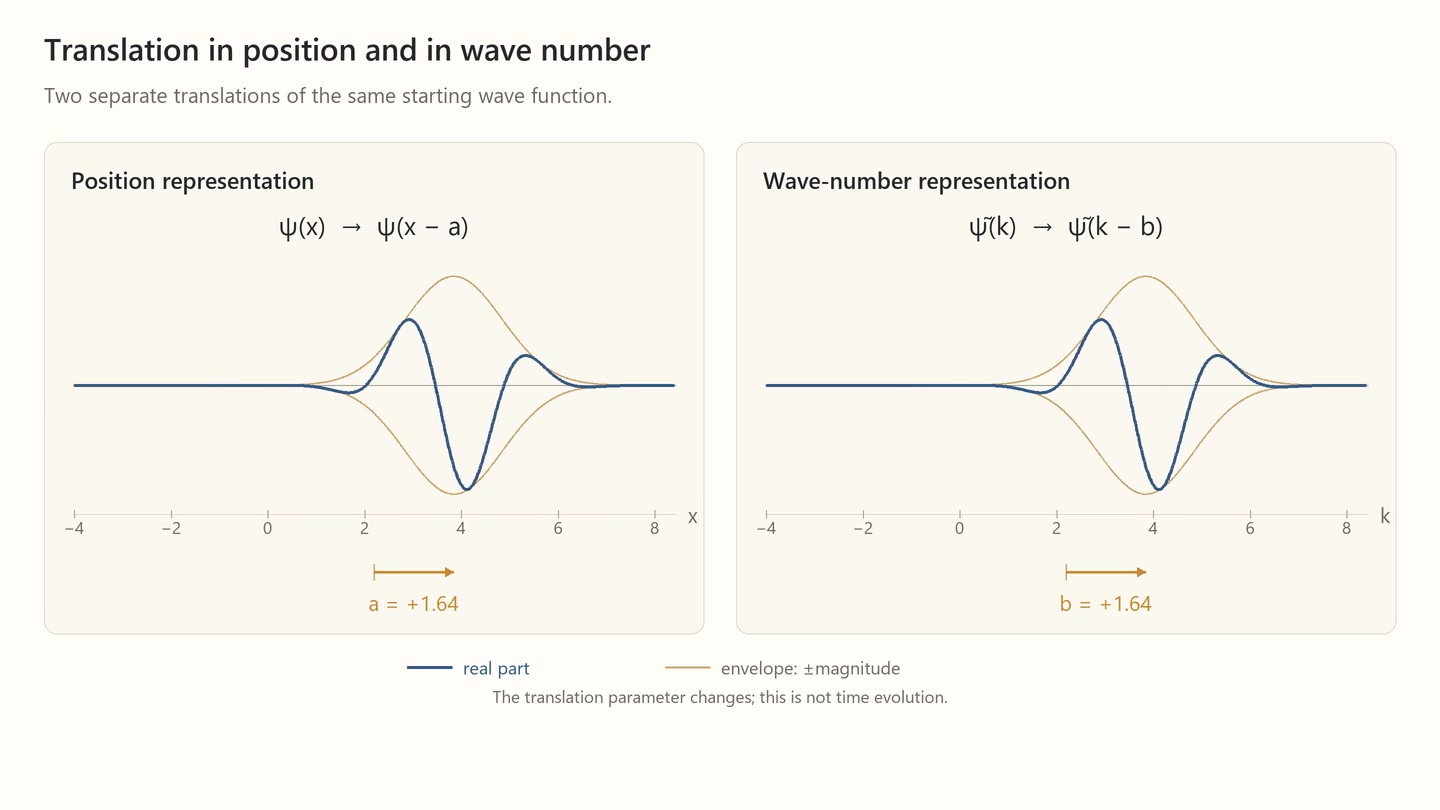
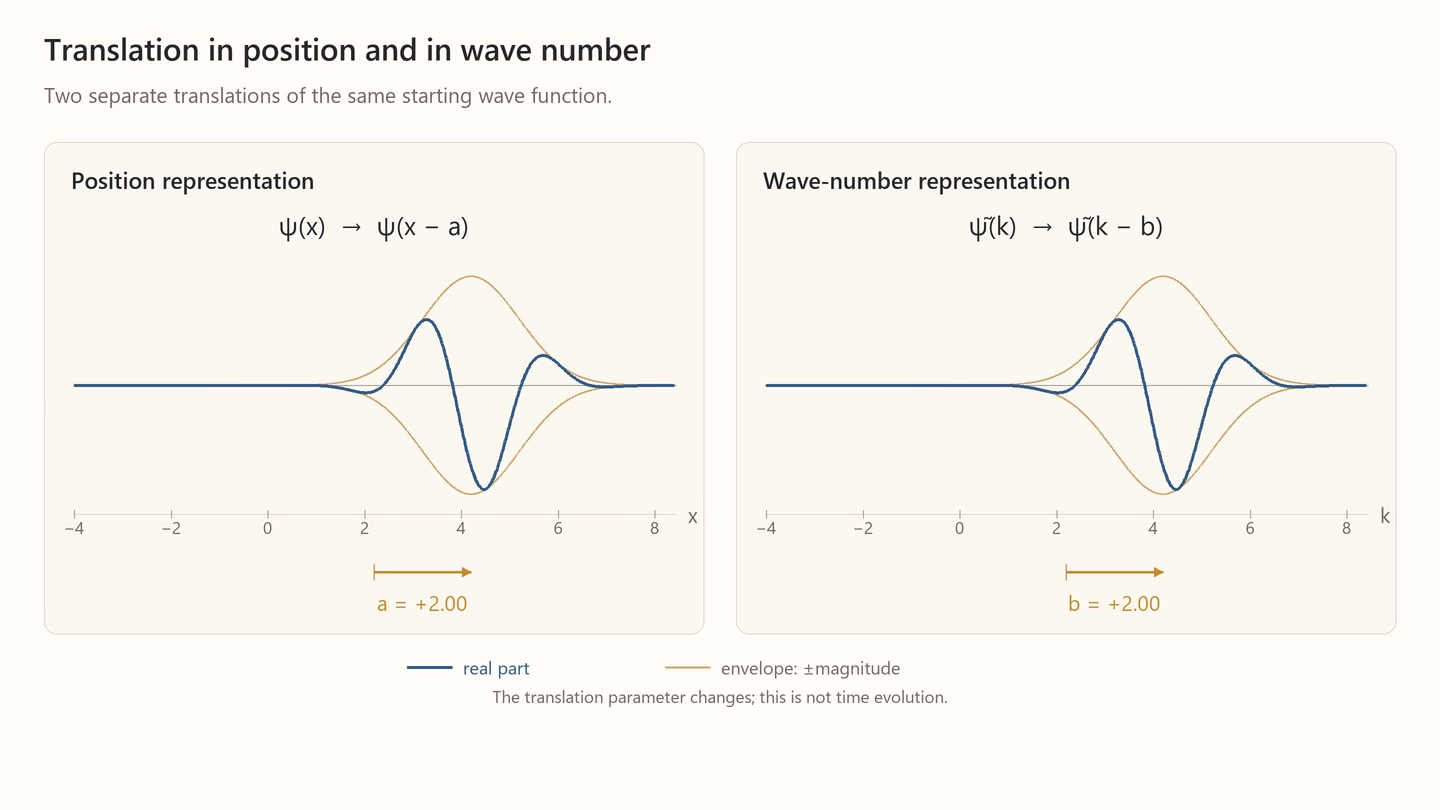
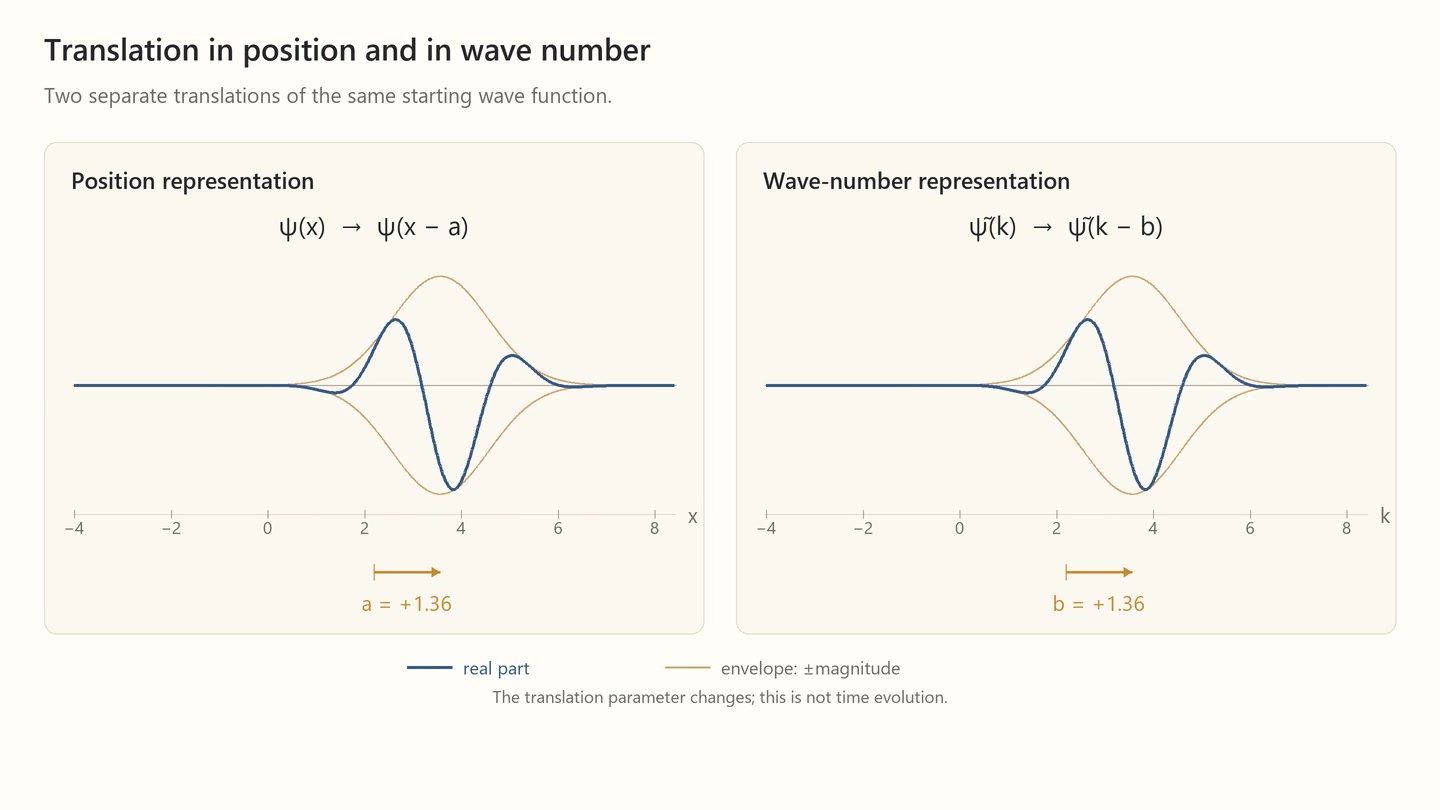
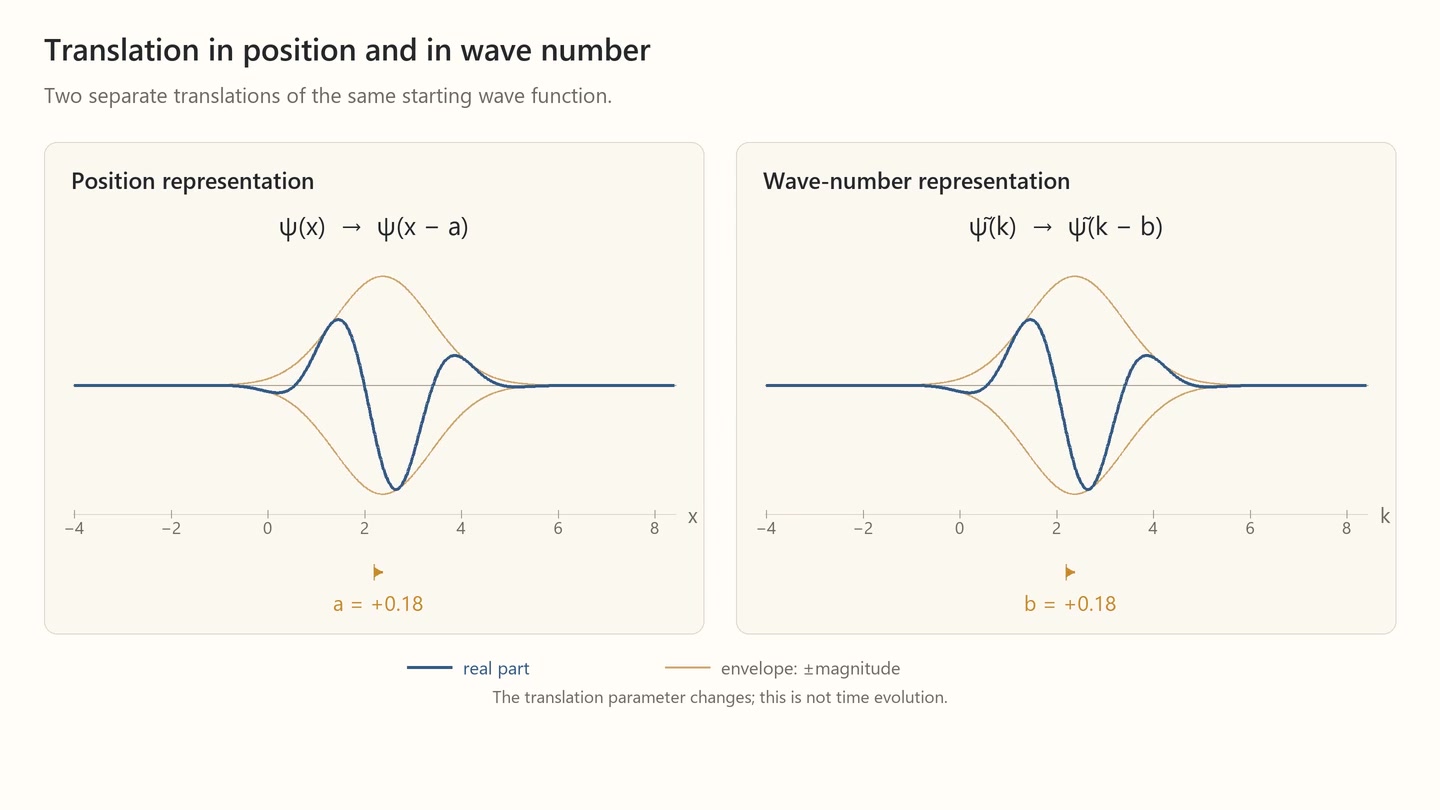
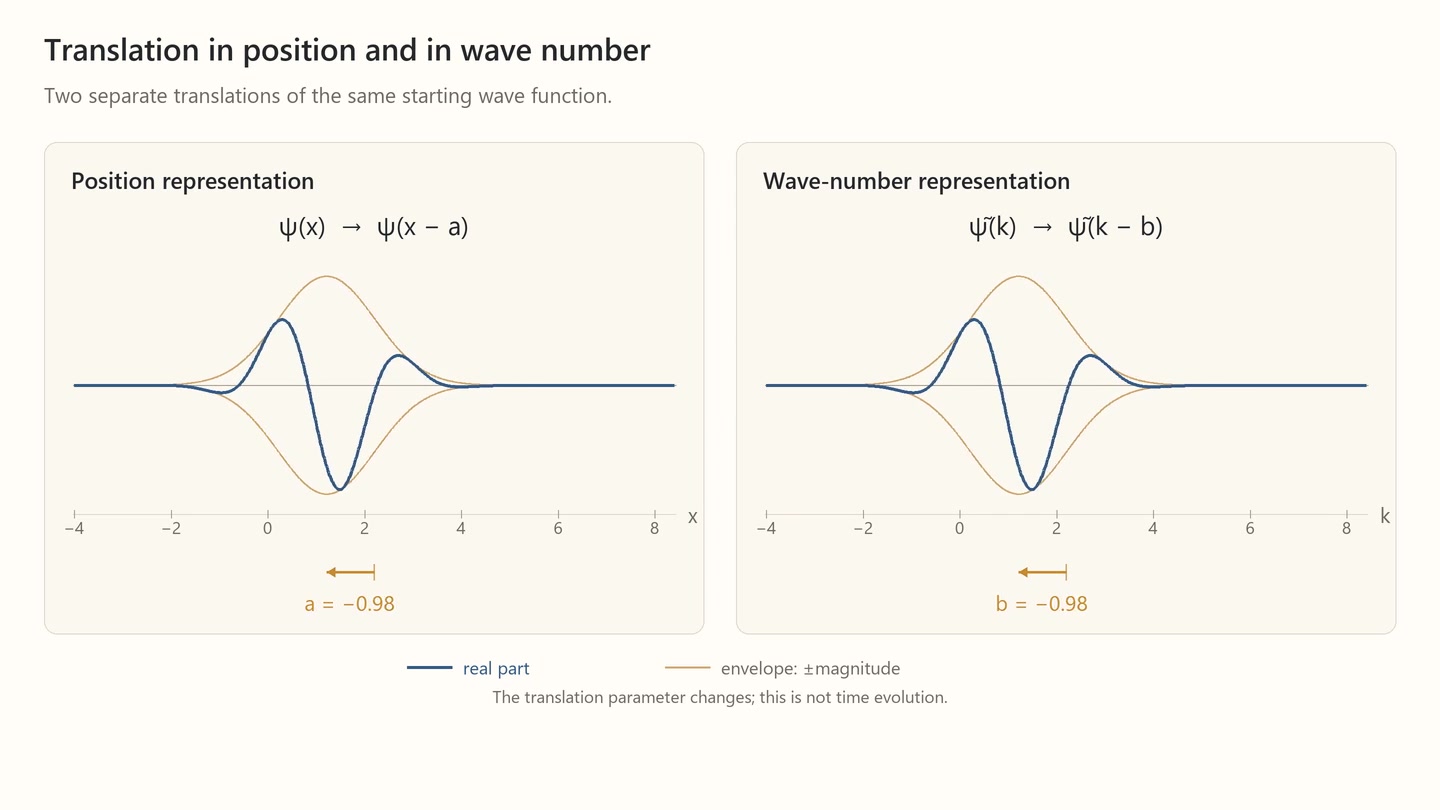
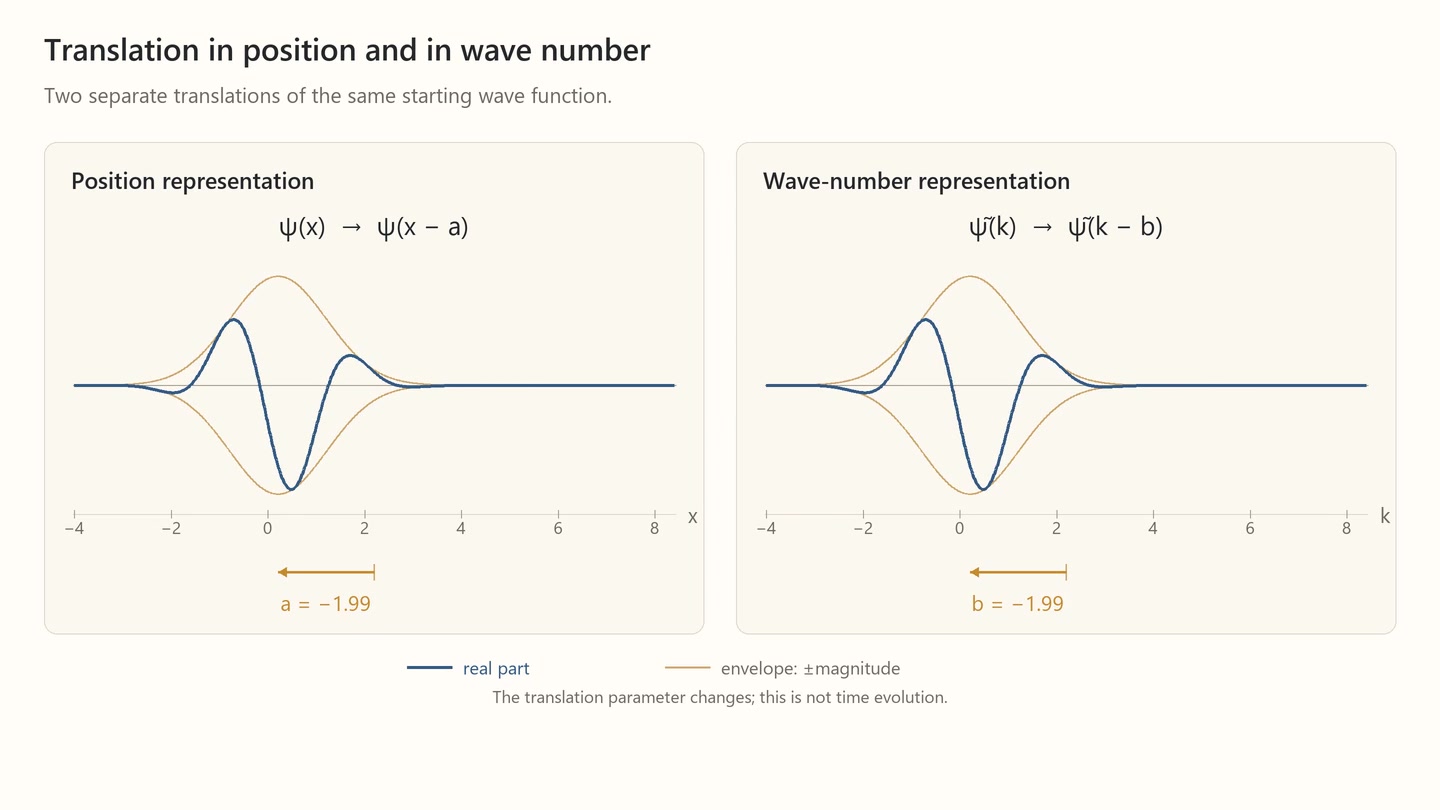
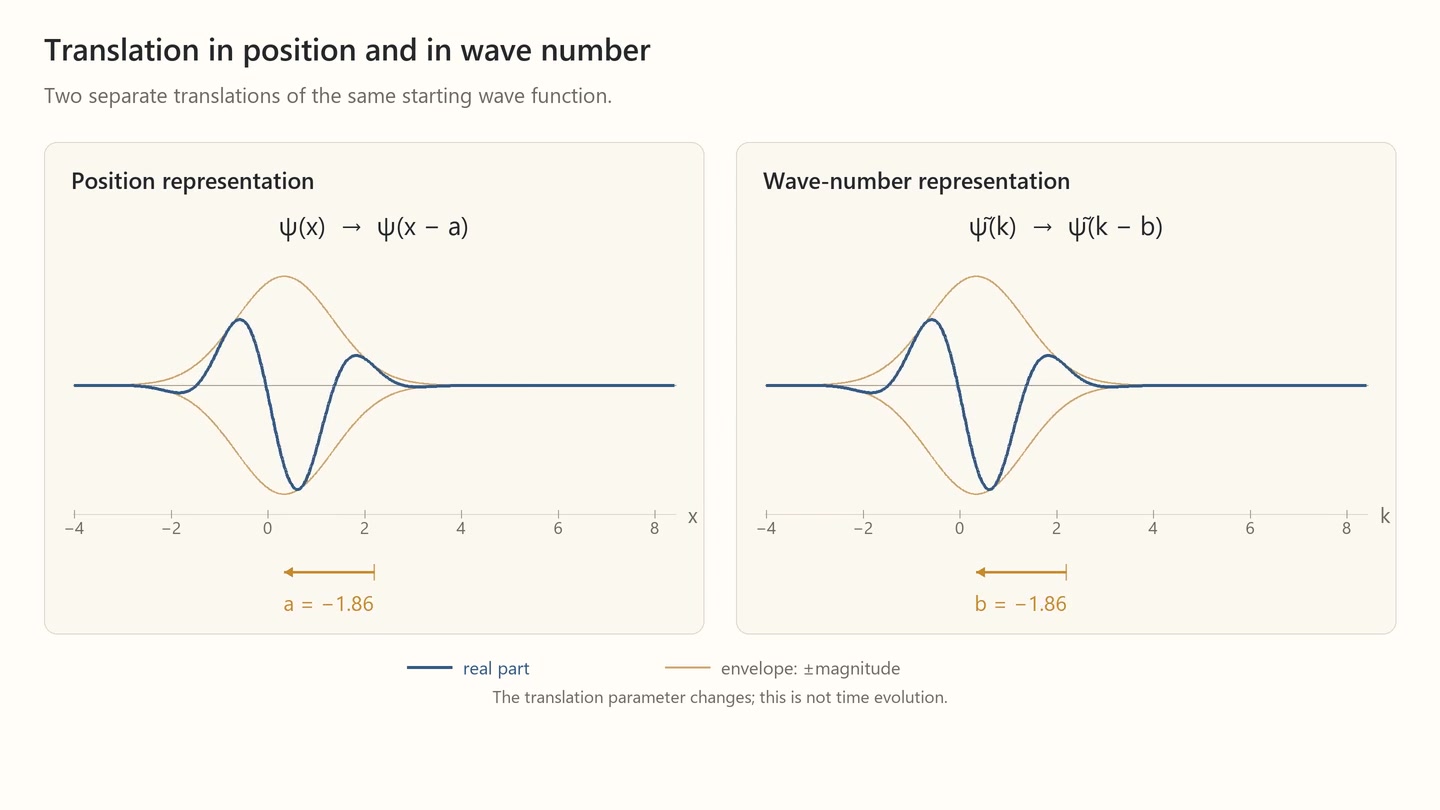
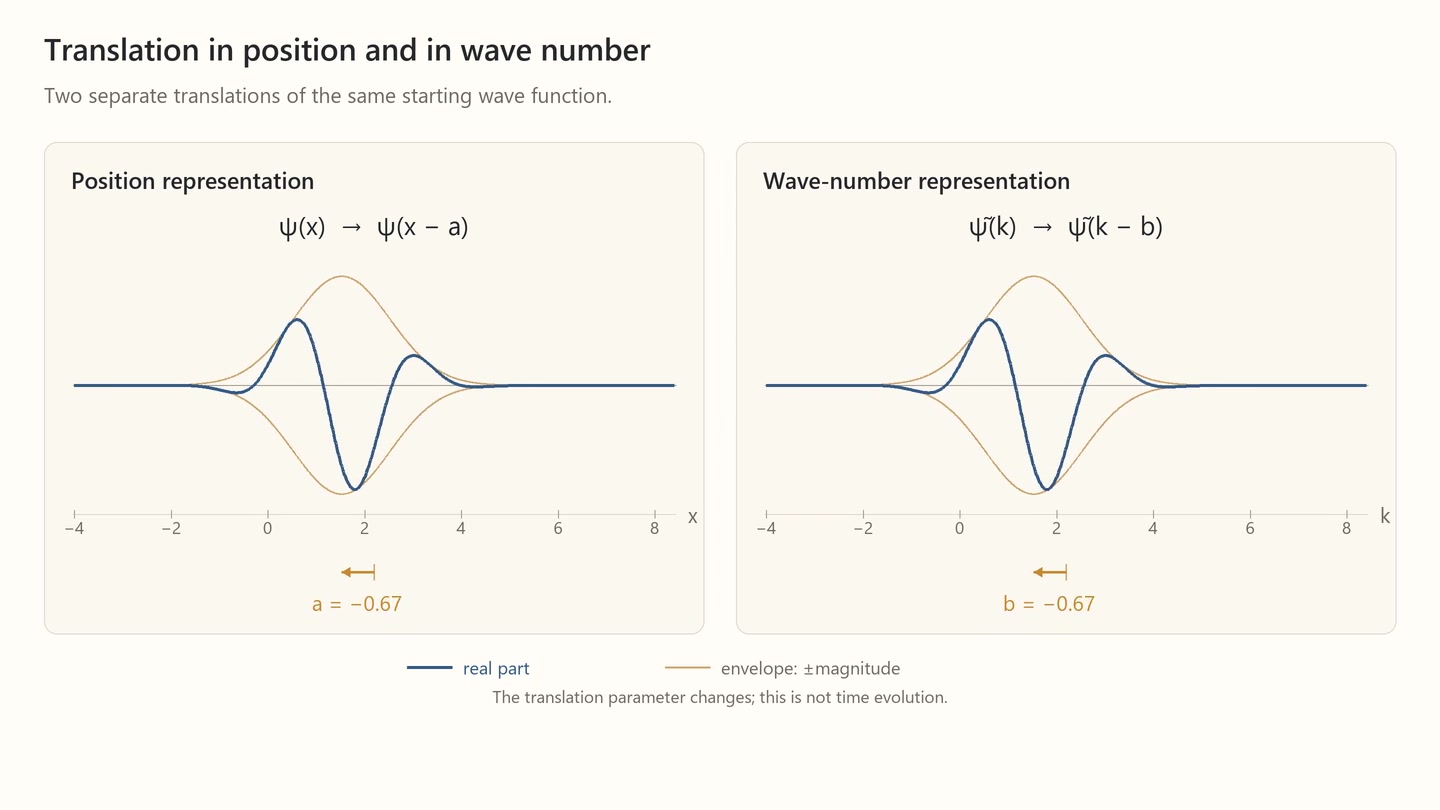
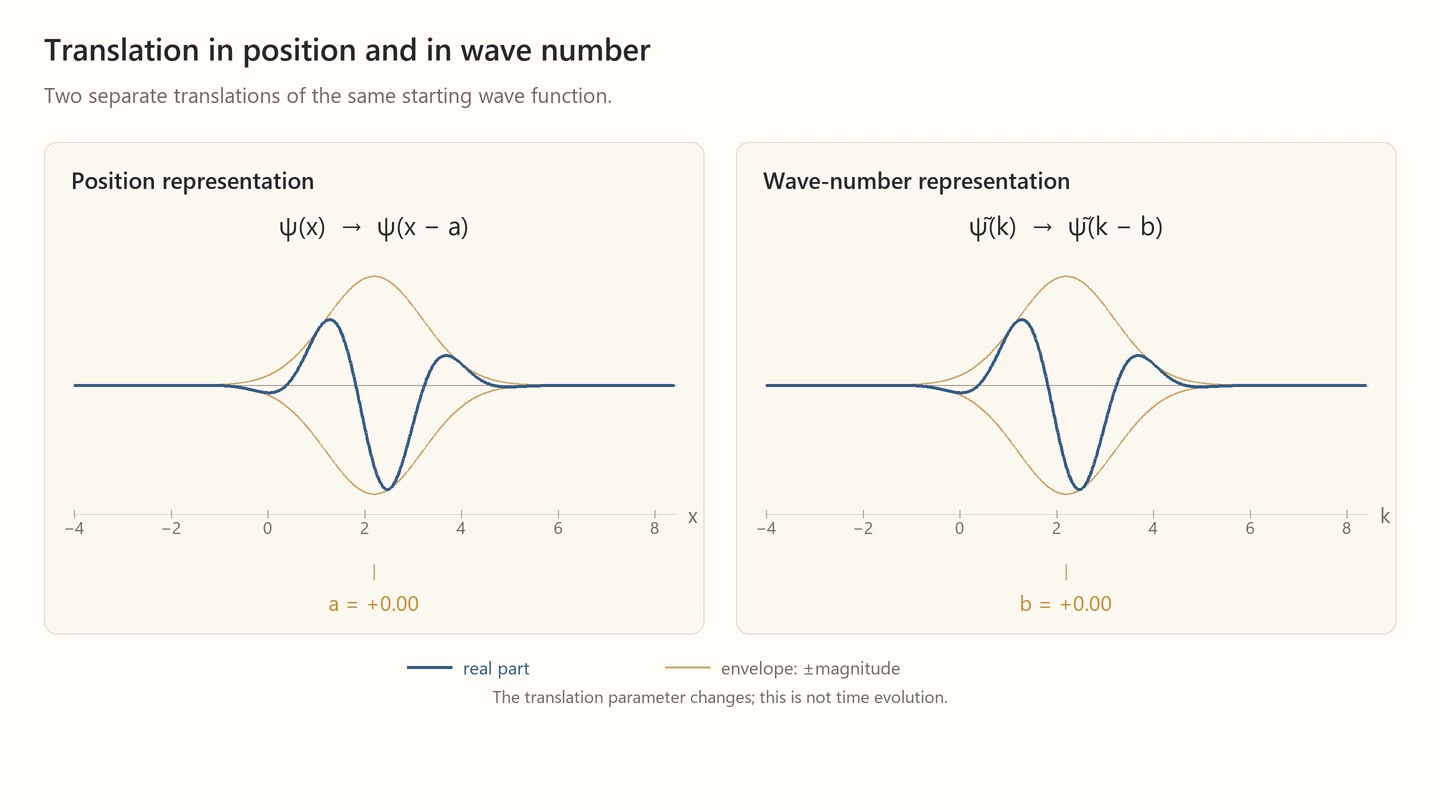
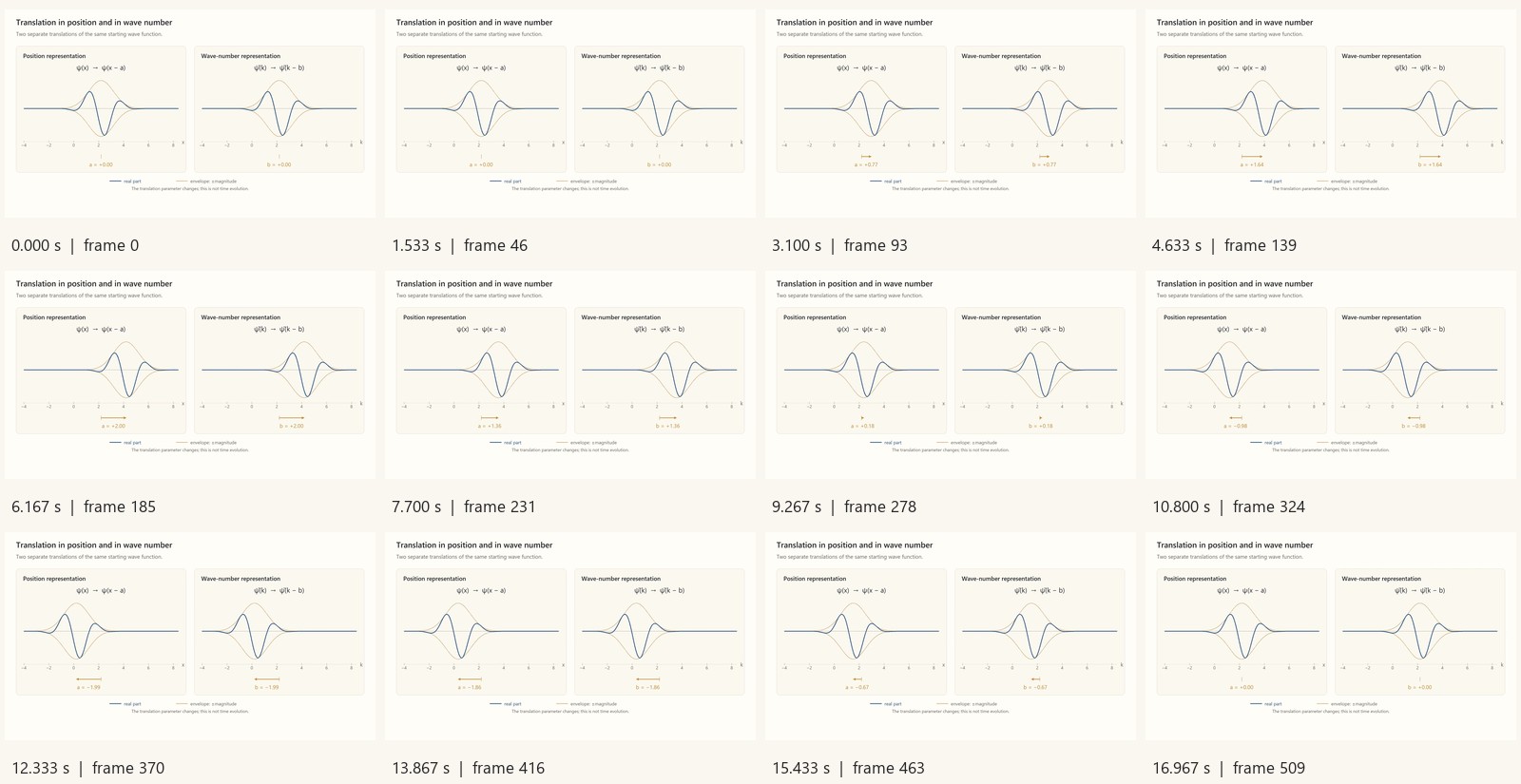
Wave Packet translated in position and momentum space
symmetry-ccr-x-k-translations-symmetric.mp4
These are sparse samples decoded from the current MP4, not newly rendered illustrations. They can support checks of the sampled states and labels, but cannot establish continuous motion, timing, transitions, or the absence of problems between samples. Use the full MP4 when judging those properties.
1440 × 810 · 30 fps · 17 s · 510 frames · 12 samples
MP4 SHA-256 117304347b7c29660a1f3a461d385aaed8b99c250a0ddffe5d77a9ac6a3d203f
Frame manifest · Context markdown · Download complete review packet
Chapter context
Section: The Heisenberg Symmetry Group. Excerpts are verbatim; line numbers refer to the included chapter markdown.
Caption
Wave Packet translated in position and momentum space
Image description
Separate translations in position and wave number, each shown in its own representation
Before the animation
Chapter lines 839–839
We can understand Fourier analysis in terms of the symmetry group that acts on wave functions, the Heisenberg group. This group's actions preserve the overlaps between states, and therefore their distinguishability. They do not in general preserve the behavior of those states as they evolve. In this sense, they are symmetries of state space, whether or not they are also dynamical symmetries of a particular system. This group not only underlies Fourier analysis, but in defining similarity and distinguishability of wave functions, supplies an essential ingredient for a logically viable notion of state.
Chapter lines 841–841
We can translate a wave function either in $x$-space or in $k$-space. While shifting the wave number isn't a translation in the familiar physical space we live in, from a mathematical perspective, $k$-space is the dual, or equivalent up to role reversal, of $x$-space.
After the animation
Chapter lines 849–849
The overlap between two complex wave functions is their inner product:
Chapter lines 851–855
Generation source
Run the main script without --stills-only. It validates the Gaussian Fourier pair, draws both panels with Pillow, and pipes 510 RGB frames to FFmpeg. No local Python imports or input movie are used.
Mapping evidence and limits
The script's NAME exactly matches the linked movie; render() writes that MP4 and decodes a sample at 9.5 s. Constants specify 1440 x 810, 30 fps, 17 s. No matching validation JSON is present, so this is a source/output-name attribution rather than a hash-attested build.
Source SHA-256 values identify the exact downloadable bytes in this packet. The source mapping and recorded checks explain the likely generation pipeline; they do not prove that these exact source bytes produced the movie. A GitHub link pinned to a commit is provided only when the delivered source bytes exactly match that path at the build's Git HEAD.
- scripts/generate_symmetry_ccr_x_k_translations_symmetric.py · GitHub at 974f9de35254
SHA-256 3962202e5701486a292cfe2d80f2de89da1197fd8980afce44d077e9032cc4ba
Decoded contact sheet
Extraction method: Twelve evenly spaced decoded frame indices, including first and last. Native-resolution JPEGs from the encoded MP4; timestamps read from FFmpeg showinfo. No source rerendering. Frame indices are zero-based. Sparse samples do not establish continuous motion or capture every transition.. Frame indices are zero-based.
Full-size sampled frames